
Biometric Census
Accurate population count starts here
Gain a comprehensive view of your population while ensuring robust data integrity and security — from the first household to the final report.
Biometric Census
Accurate population count starts here
Gain a comprehensive view of your population while ensuring robust data integrity and security — from the first household to the final report.
Why Laxton for census
Streamline large-scale data collection
Rapid Data Collection
Deploy user-friendly mobile devices that simplify enumeration, guiding census workers through data entry with intuitive prompts and automated validations.
Advanced Security & Privacy
Safeguard sensitive citizen data with state-of-the-art encryption and secure protocols, adhering to global data-protection regulations.
Offline & Online
Capture information in areas with limited connectivity using offline modes — then sync securely when back online for a seamless data transfer.

Biometric Data Integrity
Integrating biometrics into census operations uniquely identifies each individual through facial recognition, fingerprints, or iris scans. Every respondent is counted once — preventing duplicates and safeguarding personal data at national scale.
View registration products

Rugged Field Devices
Laxton’s purpose-built citizen data-collection devices ensure uninterrupted performance — even in areas without electricity or internet. Built to be dropped, dusted, and deployed anywhere enumeration takes your teams.
View products
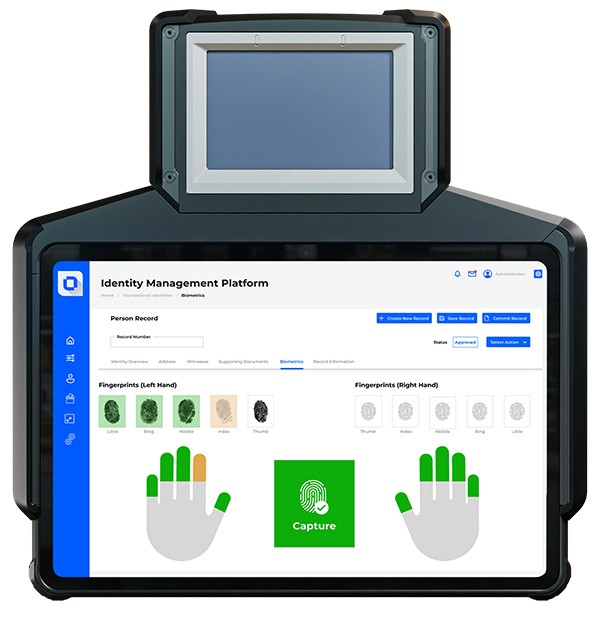
Census Enumeration Software
Laxton’s applications provide secure biometric enrolment, identity verification, and seamless data management across mobile and desktop platforms. An intuitive design ensures smooth operation for enumerators of every experience level.
View the platform
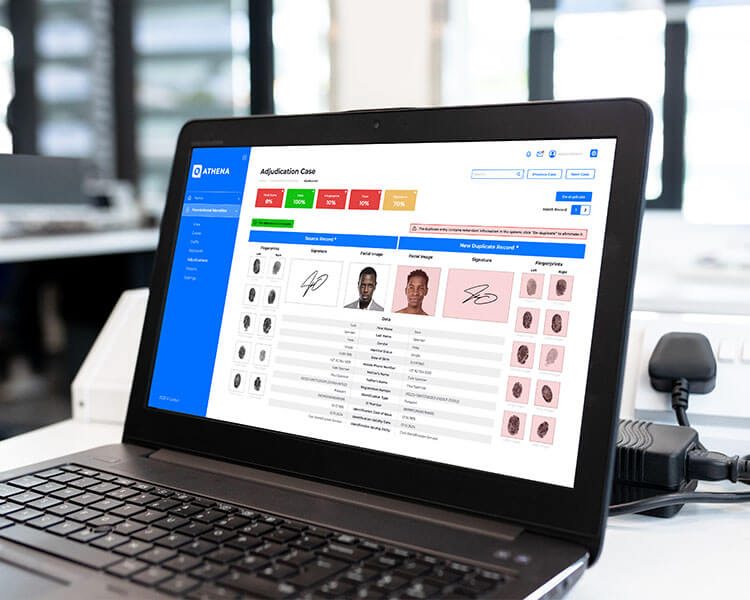
Deduplication & Adjudication
A central platform matches every new record against the national biometric database in real time, flags potential duplicates, and routes exceptions to trained adjudicators — so every person is counted once, and only once.
View the platform
Biometric Data Integrity
Integrating biometrics into census operations uniquely identifies each individual through facial recognition, fingerprints, or iris scans. Every respondent is counted once — preventing duplicates and safeguarding personal data at national scale.
View registration products
Census Enumeration Software
Laxton’s applications provide secure biometric enrolment, identity verification, and seamless data management across mobile and desktop platforms. An intuitive design ensures smooth operation for enumerators of every experience level.
View the platform
Rugged Field Devices
Laxton’s purpose-built citizen data-collection devices ensure uninterrupted performance — even in areas without electricity or internet. Built to be dropped, dusted, and deployed anywhere enumeration takes your teams.
View products
Deduplication & Adjudication
A central platform matches every new record against the national biometric database in real time, flags potential duplicates, and routes exceptions to trained adjudicators — so every person is counted once, and only once.
View the platform
Case study · Uganda
Uganda sets a new standard for digital census
45.9M
People covered
135,000
Field staff trained
10 days
To register everyone
View case study →

Frequently Asked Questions
What is a biometric census, and how does it work?
A biometric census captures each resident’s biographic details alongside unique identifiers — fingerprints, facial image, or iris scan. Enumerators record households on handheld devices, and the biometrics guarantee every person is counted as a distinct, verifiable individual rather than a name on a form.
Can census data be collected in areas with no electricity or internet?
Yes. Laxton devices are built for the field, run on long-life batteries, and operate fully offline. Records are stored securely on-device during enumeration and sync to the central registry automatically once a connection is available.
How quickly can a national census be deployed and completed?
Deployments scale to the size of the programme. In Uganda, 135,000 trained field staff using Laxton kits covered 45.9 million people in just 10 days — a pace made possible by rapid device provisioning, guided workflows, and near-real-time monitoring.
How does biometric data support analysis after enumeration?
Clean, deduplicated records flow into a consolidated registry ready for tabulation and reporting. Program managers gain accurate demographic breakdowns and real-time coverage dashboards, so results can be published faster and with greater confidence.
How does biometric registration prevent duplicate or missed counts?
Because each person’s biometrics are unique, the system automatically flags anyone who has already been enrolled and deduplicates records at national scale. This eliminates double-counting, catches ghost entries, and gives statisticians a clean, defensible population figure.
How is residents’ personal and biometric data kept secure?
Data is encrypted on the device and in transit, with role-based access controls and secure protocols aligned to global data-protection regulations. Biometric templates are stored in a protected format so raw images are never exposed.
What devices and software do enumerators use in the field?
Enumerators use rugged handhelds and tablets running Laxton’s Android and Windows applications, which guide data entry with intuitive prompts and automated validations — reducing training time and keeping data quality high from the first household.
Frequently Asked Questions
What is a biometric census, and how does it work?
A biometric census captures each resident’s biographic details alongside unique identifiers — fingerprints, facial image, or iris scan. Enumerators record households on handheld devices, and the biometrics guarantee every person is counted as a distinct, verifiable individual rather than a name on a form.
How does biometric registration prevent duplicate or missed counts?
Because each person’s biometrics are unique, the system automatically flags anyone who has already been enrolled and deduplicates records at national scale. This eliminates double-counting, catches ghost entries, and gives statisticians a clean, defensible population figure.
Can census data be collected in areas with no electricity or internet?
Yes. Laxton devices are built for the field, run on long-life batteries, and operate fully offline. Records are stored securely on-device during enumeration and sync to the central registry automatically once a connection is available.
How is residents’ personal and biometric data kept secure?
Data is encrypted on the device and in transit, with role-based access controls and secure protocols aligned to global data-protection regulations. Biometric templates are stored in a protected format so raw images are never exposed.
How quickly can a national census be deployed and completed?
Deployments scale to the size of the programme. In Uganda, 135,000 trained field staff using Laxton kits covered 45.9 million people in just 10 days — a pace made possible by rapid device provisioning, guided workflows, and near-real-time monitoring.
What devices and software do enumerators use in the field?
Enumerators use rugged handhelds and tablets running Laxton’s Android and Windows applications, which guide data entry with intuitive prompts and automated validations — reducing training time and keeping data quality high from the first household.
How does biometric data support analysis after enumeration?
Clean, deduplicated records flow into a consolidated registry ready for tabulation and reporting. Program managers gain accurate demographic breakdowns and real-time coverage dashboards, so results can be published faster and with greater confidence.
Frequently Asked Questions
What is a biometric census, and how does it work?
A biometric census captures each resident’s biographic details alongside unique identifiers — fingerprints, facial image, or iris scan. Enumerators record households on handheld devices, and the biometrics guarantee every person is counted as a distinct, verifiable individual rather than a name on a form.
Can census data be collected in areas with no electricity or internet?
Yes. Laxton devices are built for the field, run on long-life batteries, and operate fully offline. Records are stored securely on-device during enumeration and sync to the central registry automatically once a connection is available.
How quickly can a national census be deployed and completed?
Deployments scale to the size of the programme. In Uganda, 135,000 trained field staff using Laxton kits covered 45.9 million people in just 10 days — a pace made possible by rapid device provisioning, guided workflows, and near-real-time monitoring.
How does biometric data support analysis after enumeration?
Clean, deduplicated records flow into a consolidated registry ready for tabulation and reporting. Program managers gain accurate demographic breakdowns and real-time coverage dashboards, so results can be published faster and with greater confidence.
How does biometric registration prevent duplicate or missed counts?
Because each person’s biometrics are unique, the system automatically flags anyone who has already been enrolled and deduplicates records at national scale. This eliminates double-counting, catches ghost entries, and gives statisticians a clean, defensible population figure.
How is residents’ personal and biometric data kept secure?
Data is encrypted on the device and in transit, with role-based access controls and secure protocols aligned to global data-protection regulations. Biometric templates are stored in a protected format so raw images are never exposed.
What devices and software do enumerators use in the field?
Enumerators use rugged handhelds and tablets running Laxton’s Android and Windows applications, which guide data entry with intuitive prompts and automated validations — reducing training time and keeping data quality high from the first household.
SOLUTIONS
PRODUCTS
RESOURCES
Company
Corporate Responsibility

Laxton is a DNP Company
DNP is a leading global innovator in secure printing, smart communication, and digital solutions.
SOLUTIONS
PRODUCTS
RESOURCES
Company
Corporate Responsibility
Laxton is a DNP Company
DNP is a leading global innovator in secure printing, smart communication, and digital solutions.
SOLUTIONS
PRODUCTS
RESOURCES
Company
Corporate Responsibility
Laxton is a DNP Company
DNP is a leading global innovator in secure printing, smart communication, and digital solutions.