
National ID
National ID
A verifiable identity for every citizen
A verifiable identity for every citizen
Secure biometric systems that power citizen registration, identity verification and programme management for governments worldwide.
Secure biometric systems that power citizen registration, identity verification and programme management for governments worldwide.
National ID
A verifiable identity for every citizen
Secure biometric systems that power citizen registration, identity verification and programme management for governments worldwide.

Why governments choose Laxton
One partner for the entire identity lifecycle
End-to-end capability
Registration, deduplication, card issuance, verification and renewal, all delivered and supported by one company.
Field-proven systems
Rugged devices and robust software built for remote field work and busy city registration centres.
Decades of experience
Used in national programmes in more than 50 countries since 2004, serving over 400 million people.
Identity registration
Laxton provides rugged, field-ready ID registration devices that capture biographic data, fingerprints, iris, facial images and document scans in a single workflow. They run on battery and work offline, so teams can register people in remote villages as well as city offices.

Identity registration
Laxton provides rugged, field-ready ID registration devices that capture biographic data, fingerprints, iris, facial images and document scans in a single workflow. They run on battery and work offline, so teams can register people in remote villages as well as city offices.
Deduplication
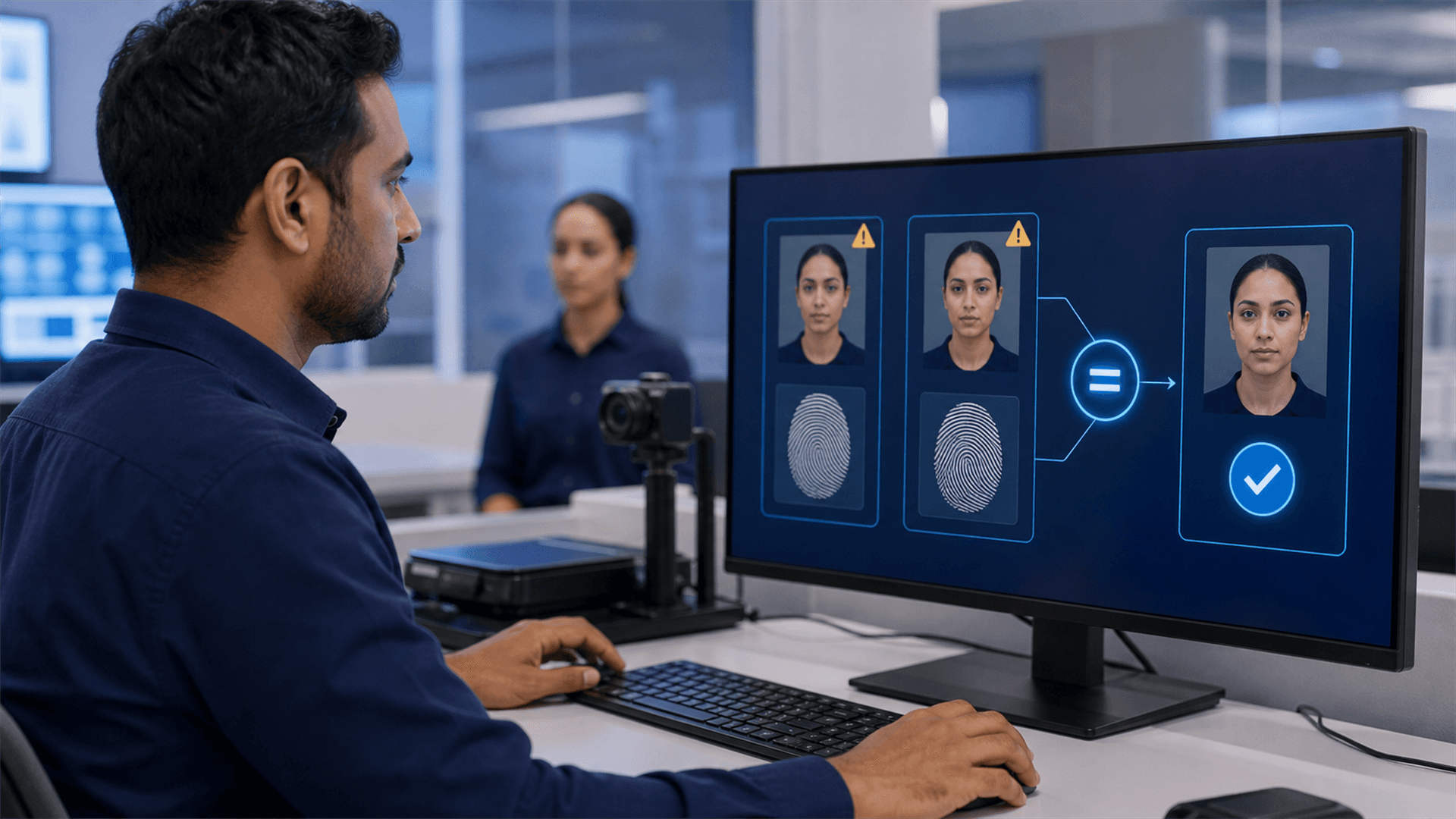
Accurate identity starts with clean data. Laxton’s registration software connects to an ABIS (automated biometric identification system), which matches each new applicant against existing records and flags duplicates before they enter the register.
Deduplication
Accurate identity starts with clean data. Laxton’s registration software connects to an ABIS (automated biometric identification system), which matches each new applicant against existing records and flags duplicates before they enter the register.
Adjudication
Adjudication is the manual review of possible duplicates and other exceptions. Athena sends each flagged case to an authorised officer through configurable workflows, so registration keeps moving while cases are resolved.

Adjudication
Adjudication is the manual review of possible duplicates and other exceptions. Athena sends each flagged case to an authorised officer through configurable workflows, so registration keeps moving while cases are resolved.
Personalisation
Laxton card personalisation systems print and encode ID documents, including contact and contactless chips, to international standards.

Personalisation
Laxton card personalisation systems print and encode ID documents, including contact and contactless chips, to international standards.
Issuance and distribution
Getting the right card to the right person matters as much as producing it. Laxton supports central and local issuance, with tracking and chain-of-custody tools that show programme managers where each card is until it reaches the citizen.

Issuance and distribution
Getting the right card to the right person matters as much as producing it. Laxton supports central and local issuance, with tracking and chain-of-custody tools that show programme managers where each card is until it reaches the citizen.
Authentication and verification
An ID card is only useful if it can be checked where people use it. Laxton verification devices and software confirm a cardholder’s identity at border posts, government offices and banks.

Authentication and verification
An ID card is only useful if it can be checked where people use it. Laxton verification devices and software confirm a cardholder’s identity at border posts, government offices and banks.
Lifecycle management
Identity programmes don’t end at issuance. Athena handles renewals, replacements, data updates, revocations and decommissioning through operator-controlled workflows that keep citizen records accurate and credentials current.

Lifecycle management
Identity programmes don’t end at issuance. Athena handles renewals, replacements, data updates, revocations and decommissioning through operator-controlled workflows that keep citizen records accurate and credentials current.

Identity registration products
Multimodal biometric registration devices capture fingerprints, iris and face images, with quality checks at capture. For central offices and remote communities alike.
Identity management software
Athena, Laxton’s identity management system, runs registration, adjudication, issuance and renewal in one platform.

ID printers
Chip encoding, laser engraving and security printing in one workflow, so each card comes off the line finished and ready to issue.

ID documents
Polycarbonate ID cards, eID cards and travel documents, built to international security standards and designed to each country’s own specification. Durable and tamper-resistant.

Certified partner
MOSIP SI Partner
Laxton is a certified MOSIP System Integrator, delivering open-source foundational identity platforms tailored to national programme requirements.
View MOSIP solution
Certified partner
MOSIP SI Partner
Laxton is a certified MOSIP System Integrator, delivering open-source foundational identity platforms tailored to national programme requirements.
View MOSIP solution
Certified partner
MOSIP SI Partner
Laxton is a certified MOSIP System Integrator, delivering open-source foundational identity platforms tailored to national programme requirements.
View MOSIP solution

Malawi · National ID programme
”
In a record time of 180 days, 9.1 million citizens were registered with their biometric attributes. Malawi’s first biometric citizen database was established, a model for other countries to follow.
Tariq Malik
World Bank
9.1M
Citizens registered
180 days
To a national database
1st
Biometric database
Frequently asked questions
What are the benefits of a biometric national ID system?
Each person can be registered only once, which removes ghost and duplicate identities. One verified ID can then be used for voting, health services, bank accounts and border crossings, so citizens don’t have to prove who they are again for each service.
How does the system prevent duplicate registrations?
Each new registration is matched against all existing records. Possible duplicates go to an officer for manual review (adjudication), so each citizen ends up with one identity.
Can the system work in remote environments?
Yes. Laxton registration devices run on battery and work offline, storing records on the device and syncing with the central database when a connection is available.
How is biometric data collected for a national ID?
Fingerprints, face images and iris scans are captured on biometric registration devices at fixed centres or by mobile teams. The data is encrypted and stored in the national identity database.
How can citizens authenticate themselves using a biometric national ID?
Citizens present their ID card or digital ID at banks, health centres and government offices and confirm it with a fingerprint, iris or face match. Two of these can be combined for higher-risk services.
How does Laxton support lifecycle management?
Athena handles renewals, replacements, data updates, revocations and decommissioning. Each change goes through an authorised operator, and audit trails show who changed which record and when.
Frequently asked questions
What are the benefits of a biometric national ID system?
Each person can be registered only once, which removes ghost and duplicate identities. One verified ID can then be used for voting, health services, bank accounts and border crossings, so citizens don’t have to prove who they are again for each service.
How is biometric data collected for a national ID?
Fingerprints, face images and iris scans are captured on biometric registration devices at fixed centres or by mobile teams. The data is encrypted and stored in the national identity database.
How does the system prevent duplicate registrations?
Each new registration is matched against all existing records. Possible duplicates go to an officer for manual review (adjudication), so each citizen ends up with one identity.
How can citizens authenticate themselves using a biometric national ID?
Citizens present their ID card or digital ID at banks, health centres and government offices and confirm it with a fingerprint, iris or face match. Two of these can be combined for higher-risk services.
Can the system work in remote environments?
Yes. Laxton registration devices run on battery and work offline, storing records on the device and syncing with the central database when a connection is available.
How does Laxton support lifecycle management?
Athena handles renewals, replacements, data updates, revocations and decommissioning. Each change goes through an authorised operator, and audit trails show who changed which record and when.
Frequently asked questions
What are the benefits of a biometric national ID system?
Each person can be registered only once, which removes ghost and duplicate identities. One verified ID can then be used for voting, health services, bank accounts and border crossings, so citizens don’t have to prove who they are again for each service.
How does the system prevent duplicate registrations?
Each new registration is matched against all existing records. Possible duplicates go to an officer for manual review (adjudication), so each citizen ends up with one identity.
Can the system work in remote environments?
Yes. Laxton registration devices run on battery and work offline, storing records on the device and syncing with the central database when a connection is available.
How is biometric data collected for a national ID?
Fingerprints, face images and iris scans are captured on biometric registration devices at fixed centres or by mobile teams. The data is encrypted and stored in the national identity database.
How can citizens authenticate themselves using a biometric national ID?
Citizens present their ID card or digital ID at banks, health centres and government offices and confirm it with a fingerprint, iris or face match. Two of these can be combined for higher-risk services.
How does Laxton support lifecycle management?
Athena handles renewals, replacements, data updates, revocations and decommissioning. Each change goes through an authorised operator, and audit trails show who changed which record and when.
SOLUTIONS
PRODUCTS
RESOURCES
COMPANY

Laxton is a DNP Company
DNP is a leading global innovator in secure printing, smart communication, and digital solutions.

SOLUTIONS
PRODUCTS
RESOURCES
COMPANY
Laxton is a DNP Company
DNP is a leading global innovator in secure printing, smart communication, and digital solutions.
SOLUTIONS
PRODUCTS
RESOURCES
COMPANY
Laxton is a DNP Company
DNP is a leading global innovator in secure printing, smart communication, and digital solutions.