South Africa's Digital Identity Revolution

South Africa's Digital Identity Revolution

16M+

16M+

South Africans on Legacy Green ID Books

South Africans on Legacy Green ID Books

5-10 Minutes

5-10 Minutes

per Smart ID Application

per Smart ID Application

1,000+

1,000+

Bank Branches Targeted

Bank Branches Targeted

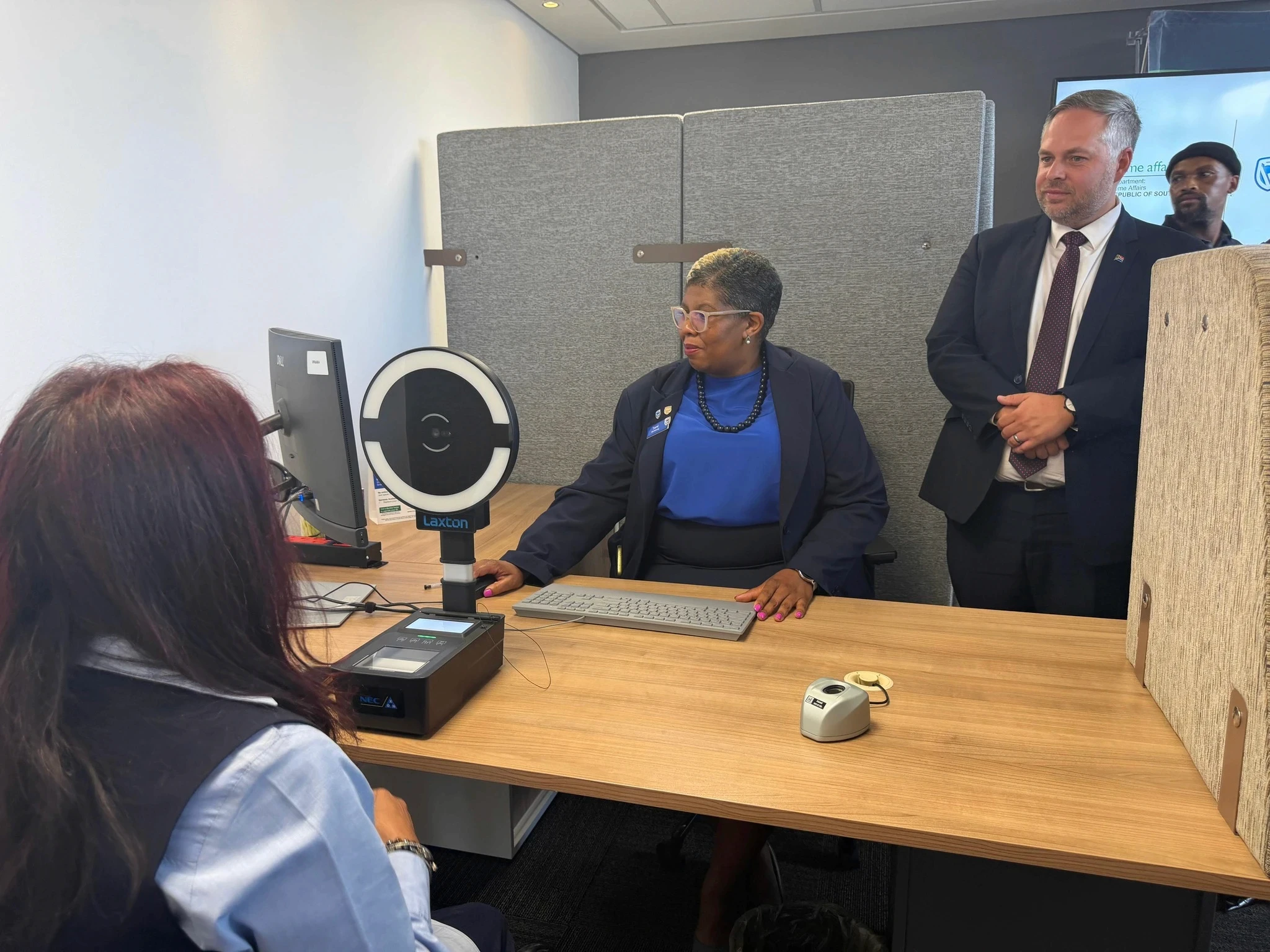
South Africa reached a landmark moment in digital governance when its Department of Home Affairs partnered with the country's leading banks to bring Smart ID enrollment directly into bank branches. Laxton provided the hardware at the heart of this transformation: the Laxton M Desktop, a compact ID enrolment station that allows citizens to complete a secure Smart ID application in under 10 minutes, with no appointment and no paperwork. Deployed across Capitec and Standard Bank branches, the solution tackles two longstanding challenges at once. It replaces the fraud-prone green ID book and expands access to identity services for the millions of South Africans who live far from a government office.

Project

Solution: National ID

Country: South Africa

Year: 2026

An Identity System Strained by Distance and Demand

South Africa's Department of Home Affairs operated just 349 offices nationwide, with only 190 equipped to process Smart IDs. For a country of over 60 million citizens, this created serious access barriers in rural and underserved communities.

At the same time, an estimated 16 million South Africans still relied on the old green barcoded ID book, one of the most fraud-prone identity documents on the continent. Long queues and manual processes made the situation worse, leaving many citizens unable to access the services they needed.

Long queues, manual processes, and the need to travel to a Home Affairs office presented a prohibitive barrier for many citizens, particularly low-income earners, the elderly, and those with mobility challenges who could not afford the time or transport costs.


Infrastructure Gap

Only 190 of the 349 Home Affairs offices were equipped to issue Smart IDs, compared to Capitec alone with over 860 branches nationwide.


Identity Fraud

The green ID book was widely exploited for fraud, impersonation, and financial crime, creating systemic insecurity.


Verification Failure

The Online Verification Service (OVS) was in crisis when Minister Schreiber took office. More than half of all verification attempts failed, with response times stretching to 24 hours.


Exclusion Risk

Citizens without a valid Smart ID were locked out of banking, healthcare, employment, and social services, compounding inequality.

South Africa's Department of Home Affairs operated just 349 offices nationwide, with only 190 equipped to process Smart IDs. For a country of over 60 million citizens, this created serious access barriers in rural and underserved communities.

At the same time, an estimated 16 million South Africans still relied on the old green barcoded ID book, one of the most fraud-prone identity documents on the continent. Long queues and manual processes made the situation worse, leaving many citizens unable to access the services they needed.

Long queues, manual processes, and the need to travel to a Home Affairs office presented a prohibitive barrier for many citizens, particularly low-income earners, the elderly, and those with mobility challenges who could not afford the time or transport costs.


Infrastructure Gap
Only 190 of the 349 Home Affairs offices were equipped to issue Smart IDs, compared to Capitec alone with over 860 branches nationwide.


Identity Fraud
The green ID book was widely exploited for fraud, impersonation, and financial crime, creating systemic insecurity.


Verification Failure
The Online Verification Service (OVS) was in crisis when Minister Schreiber took office. More than half of all verification attempts failed, with response times stretching to 24 hours.


Exclusion Risk
Citizens without a valid Smart ID were locked out of banking, healthcare, employment, and social services, compounding inequality.

Bringing Home Affairs to the People

Under DA Minister Dr Leon Schreiber, the Department of Home Affairs launched the Digital Partnership Model, a bold initiative to embed Smart ID enrollment directly inside South Africa's banking network. A secure API-based Digital Gateway connects bank branches directly to Home Affairs systems.

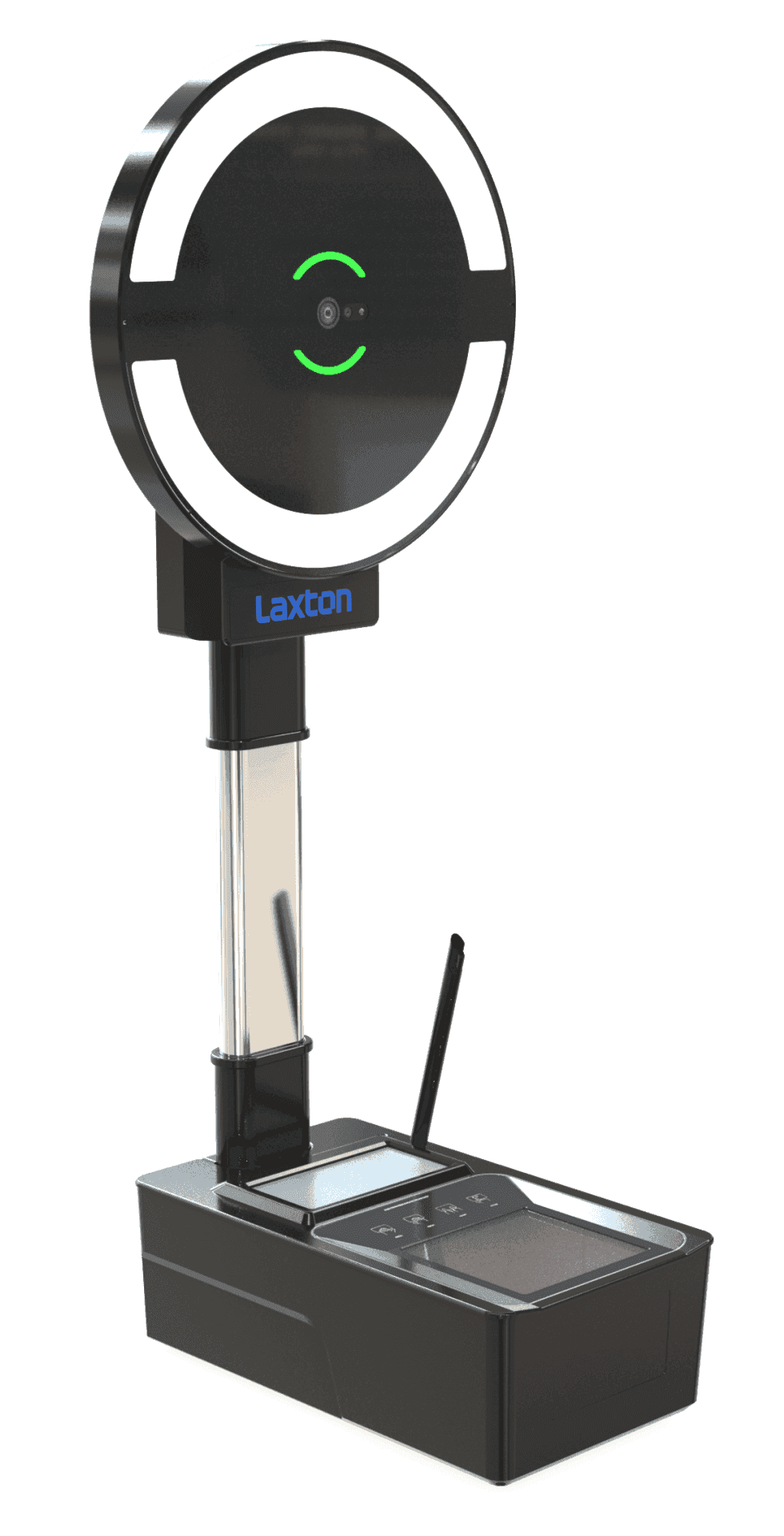
Laxton was selected as the hardware technology partner, equipping participating bank branches with purpose-built biometric enrollment stations. Each branch was outfitted with the Laxton M Desktop, a compact, all-in-one biometric capture unit engineered for high-volume, high-accuracy enrollment in commercial banking environments.

Bank-Integrated Enrollment
Citizens walk into their nearest Capitec or Standard Bank branch with no booking, no forms, and no government office visit required.

Secure API Digital Gateway
Bank branches connect directly to Home Affairs systems via a secure API, enabling fully paperless, end-to-end digital Smart ID applications.

Nationwide Phased Rollout
Starting with 9 branches on launch day, the network doubled to 34 across all 9 provinces within 72 hours, with a target of 1,000 branches by 2029.

Rural and Township Inclusion
Capitec's 860+ branch network, which extends into areas historically underserved by Home Affairs, is now a conduit for digital identity enrollment.

Under DA Minister Dr Leon Schreiber, the Department of Home Affairs launched the Digital Partnership Model, a bold initiative to embed Smart ID enrollment directly inside South Africa's banking network. A secure API-based Digital Gateway connects bank branches directly to Home Affairs systems.

Laxton was selected as the hardware technology partner, equipping participating bank branches with purpose-built biometric enrollment stations. Each branch was outfitted with the Laxton M Desktop, a compact, all-in-one biometric capture unit engineered for high-volume, high-accuracy enrollment in commercial banking environments.

Bank-Integrated Enrollment
Citizens walk into their nearest Capitec or Standard Bank branch with no booking, no forms, and no government office visit required.

Secure API Digital Gateway
Bank branches connect directly to Home Affairs systems via a secure API, enabling fully paperless, end-to-end digital Smart ID applications.

Nationwide Phased Rollout
Starting with 9 branches on launch day, the network doubled to 34 across all 9 provinces within 72 hours, with a target of 1,000 branches by 2029.

Rural and Township Inclusion
Capitec's 860+ branch network, which extends into areas historically underserved by Home Affairs, is now a conduit for digital identity enrollment.

Laxton M, a Purpose-Built for High-Volume Enrolment

Laxton M Desktop — Purpose-Built for High-Volume Enrollment

The Laxton M Desktop is a compact, all-in-one biometric capture station engineered for commercial environments where reliability, speed, and ease of use are non-negotiable. Bank staff can operate it with minimal training, and it integrates seamlessly into existing banking infrastructure via a plug-and-play connection.

Fingerprint Capture
High-resolution multi-finger scanning to national identity document standards.

Facial Imaging
Camera-based capture compliant with South African Smart ID biometric specifications.

Electronic Signature
Fully digital signature capture enabling a completely paperless application process.

Plug & Play
Connects directly to existing desktop, laptop, or tablet — no complex IT setup required.

OS Compatibility
Compatible with Windows and Android for seamless integration across banking environments.

Compact Footprint
Minimal desk space required — ideal for the space constraints of a bank teller counter.

Laxton M Desktop — Purpose-Built for High-Volume Enrollment

The Laxton M Desktop is a compact, all-in-one biometric capture station engineered for commercial environments where reliability, speed, and ease of use are non-negotiable. Bank staff can operate it with minimal training, and it integrates seamlessly into existing banking infrastructure via a plug-and-play connection.

Fingerprint Capture
High-resolution multi-finger scanning to national identity document standards.

Facial Imaging
Camera-based capture compliant with South African Smart ID biometric specifications.

Electronic Signature
Fully digital signature capture enabling a completely paperless application process.

Plug & Play
Connects directly to existing desktop, laptop, or tablet — no complex IT setup required.

OS Compatibility
Compatible with Windows and Android for seamless integration across banking environments.

Compact Footprint
Minimal desk space required — ideal for the space constraints of a bank teller counter.

South Africa's Banking Network Is Now Its Biggest Home Affairs Office

For millions of South Africans, a Capitec or Standard Bank branch is far closer than any Home Affairs office. By embedding enrollment into the existing banking network, the Digital Partnership Model meaningfully expands access for rural residents, those with mobility challenges, and low-income communities who cannot afford the time or transport to visit a government office.

The elimination of the fraud-prone green ID book — replacing it with a secure Smart ID — also strengthens South Africa's financial system. Banks and businesses can verify identity digitally, reducing fraud, streamlining KYC processes, and enabling more South Africans to participate in the formal economy.

The service is designed to be free at the point of delivery for partner banks during the launch phase, with Capitec charging only a nominal R10 logistics fee above the standard DHA application fee of R140 — minimising barriers for lower-income applicants.

English

 © Laxton 2025. All rights reserved.

English

 © Laxton 2025. All rights reserved.