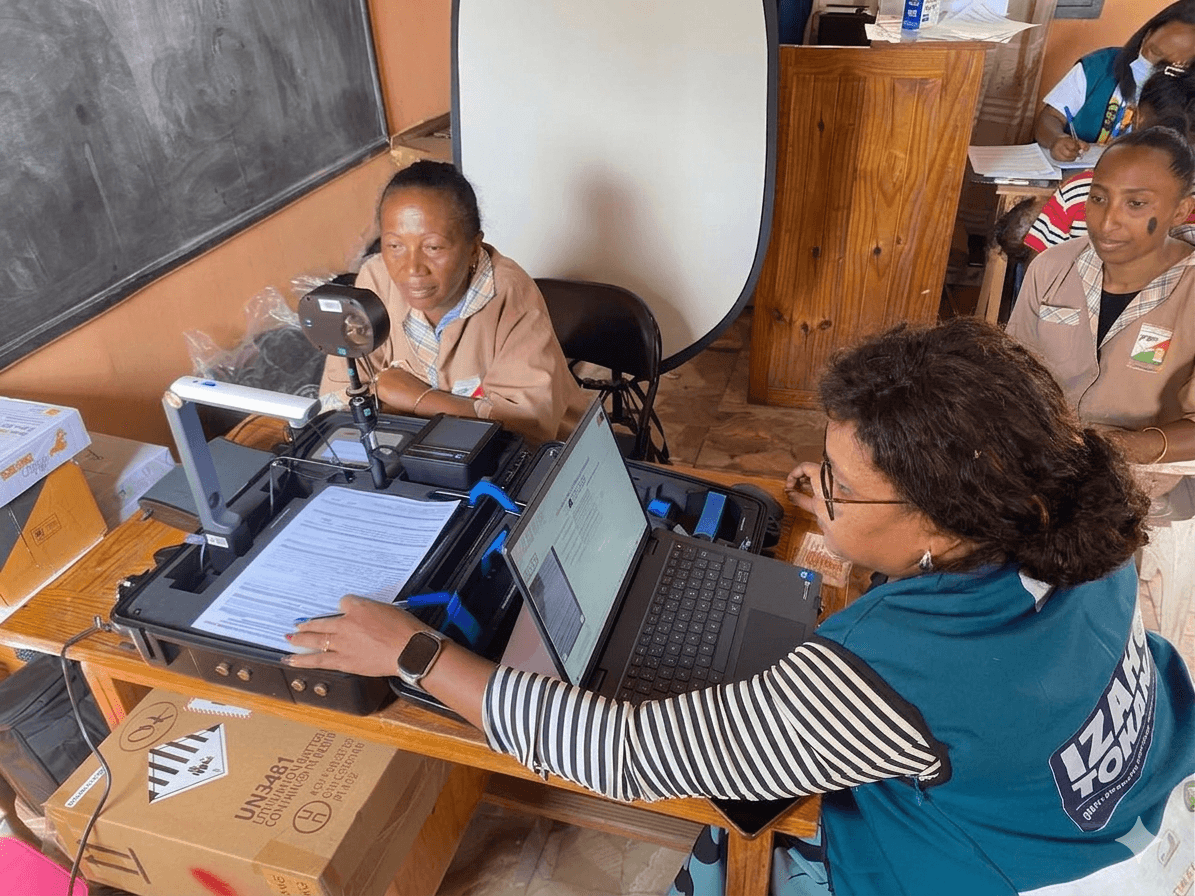
Laxton partnered with the PRODIGY digital governance programme to deliver Madagascar's new National ID, a mass biometric enrolment system that brings every citizen into a single, secure identity record for the first time.
With 33.5 million people spread across remote communes and mountainous terrain, the programme needed a solution built for both reach and resilience.
Before the rollout, identification ran on paper-based civil registers. Records clashed between offices. Access to public services and financial inclusion stayed out of reach for many. And the government had no unified database to catch duplicates or extend enrolment into underserved regions.
Project
Solution: National ID
Country: Madagascar
Year: 2026
The Limits of Paper-Based Identification
Madagascar's legacy civil registry was manual and decentralised across regions and communes, leaving it vulnerable to duplication, loss, and administrative delays. Without a central digital register, citizens struggled to prove their identity from one office to the next, and the government had no reliable way to flag duplicate or fraudulent records.
Geography made it harder. Reaching rural communities meant working around limited road access, unreliable connectivity, and patchy electricity, conditions where traditional enrolment infrastructure simply does not scale.
Building a Modern National ID from the Ground Up
Through the PRODIGY programme, Laxton was commissioned to design, supply, deploy, and support the mass biometric enrolment solution that would underpin Madagascar's National ID rollout. The assignment spanned the full project lifecycle: biometric enrolment kits, software deployment, database integration, field logistics, commissioning, quality assurance, training, and in-country operational support.
What made the programme extraordinary was the context in which it had to be delivered. Mid-project, Madagascar experienced a period of political instability and civil unrest that culminated in a change of government, fundamentally disrupting logistics chains, stakeholder engagement, and field operations. Shortly thereafter, a severe tropical cyclone caused widespread damage to transportation networks, communications, and on-site conditions at deployment locations. Despite these challenges, the programme continued, and mass enrolment still started on time.
Purpose-Built Biometric Registration Kits
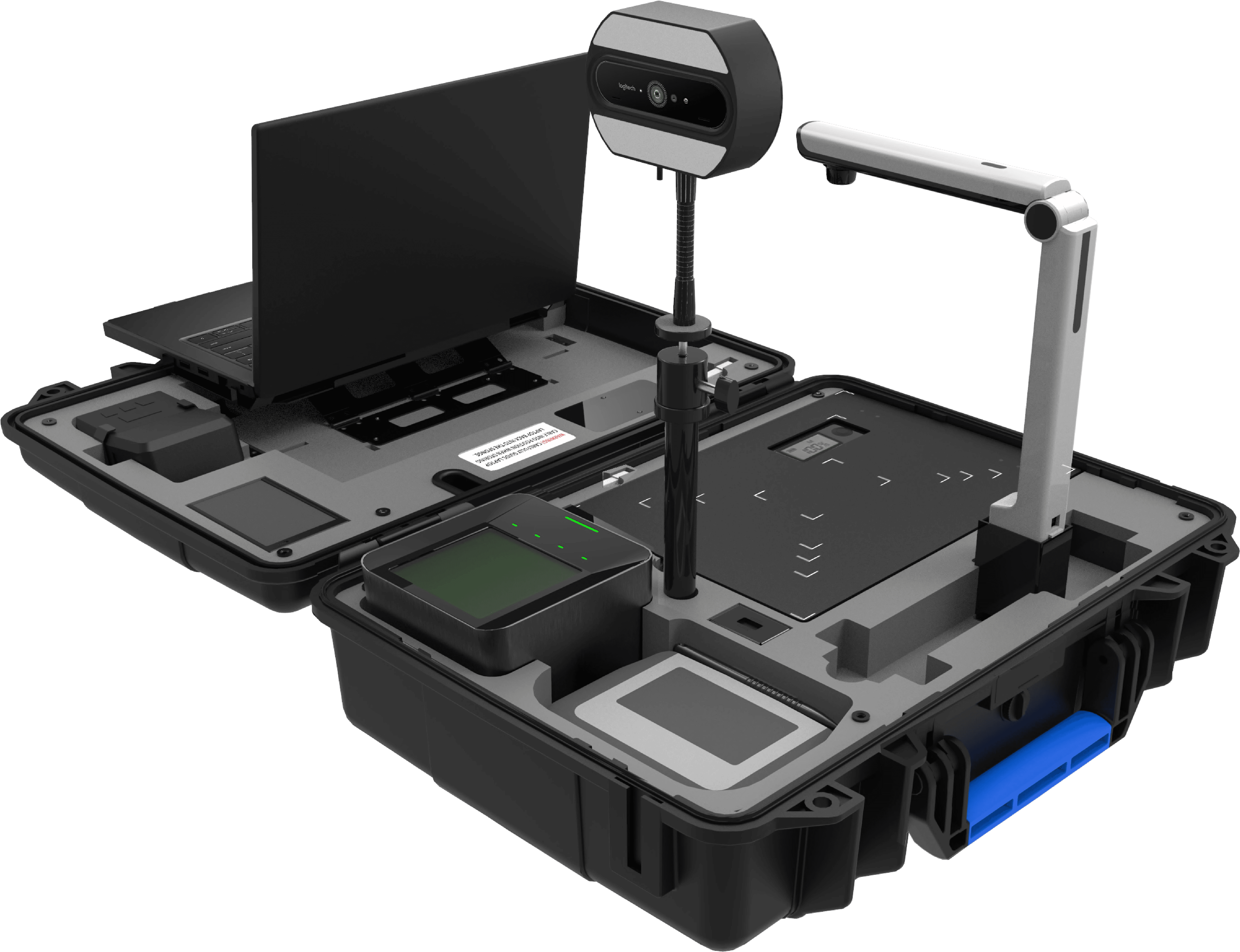
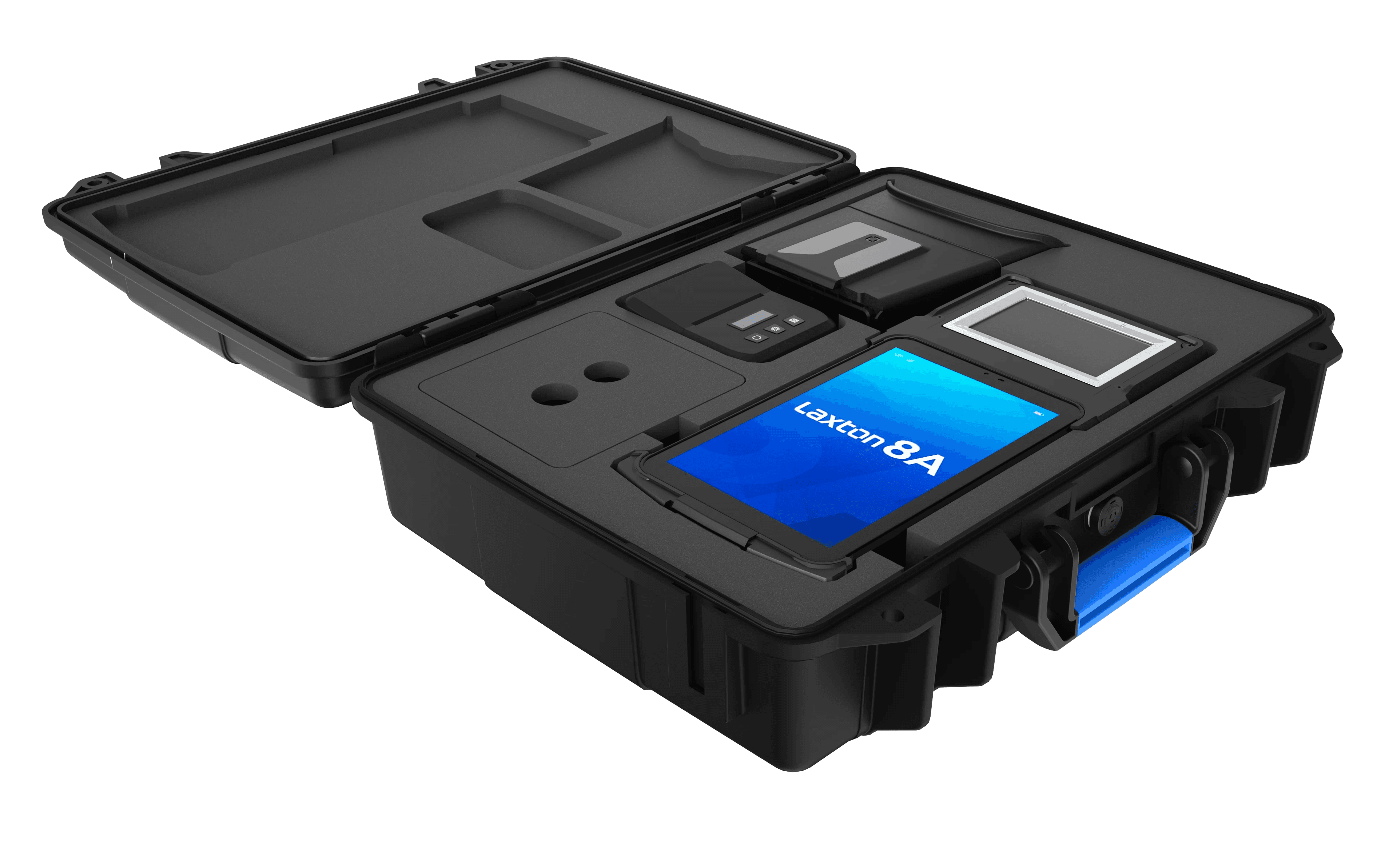
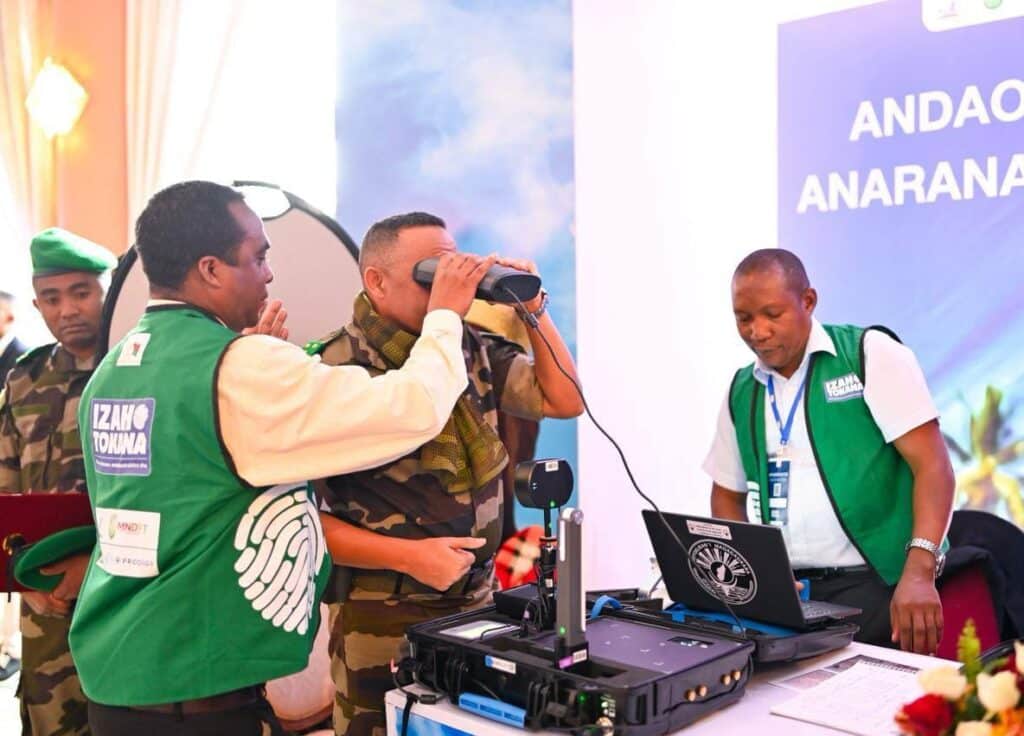
Laxton delivered two types of biometric enrolment kits customised for national-scale registration:
Mobile Kits. Ruggedised, laptop-based enrolment stations built for high-throughput registration centres.
Ultra Mobile Kits. Tablet-based kits for go-to-the-citizen deployments in hard-to-reach areas.
Each kit captures fingerprints, a facial image, and both irises, giving every enrolment a strong, accurate record. Built-in batteries, power banks, and solar panels keep the kits running through long days, even in places with little or no electricity. Weatherproof cases and smart heat control means the equipment works anywhere, from humid coastal towns to high villages on the central plateau.
With or Without Connectivity
Madagascar doesn't always have a reliable internet connection, so the system was built to work fully offline. Each kit captures the enrolment, signs it, and stores it safely on the device. When a connection is available, the data is sent to the central server, either over the mobile network or by copying it to a USB and taking it to a regional office.
During the national pilot, 54% of enrolments were sent over the mobile network and 46% were moved by USB. Every single record arrived and was processed successfully. This setup means no one is left out because of where they live.
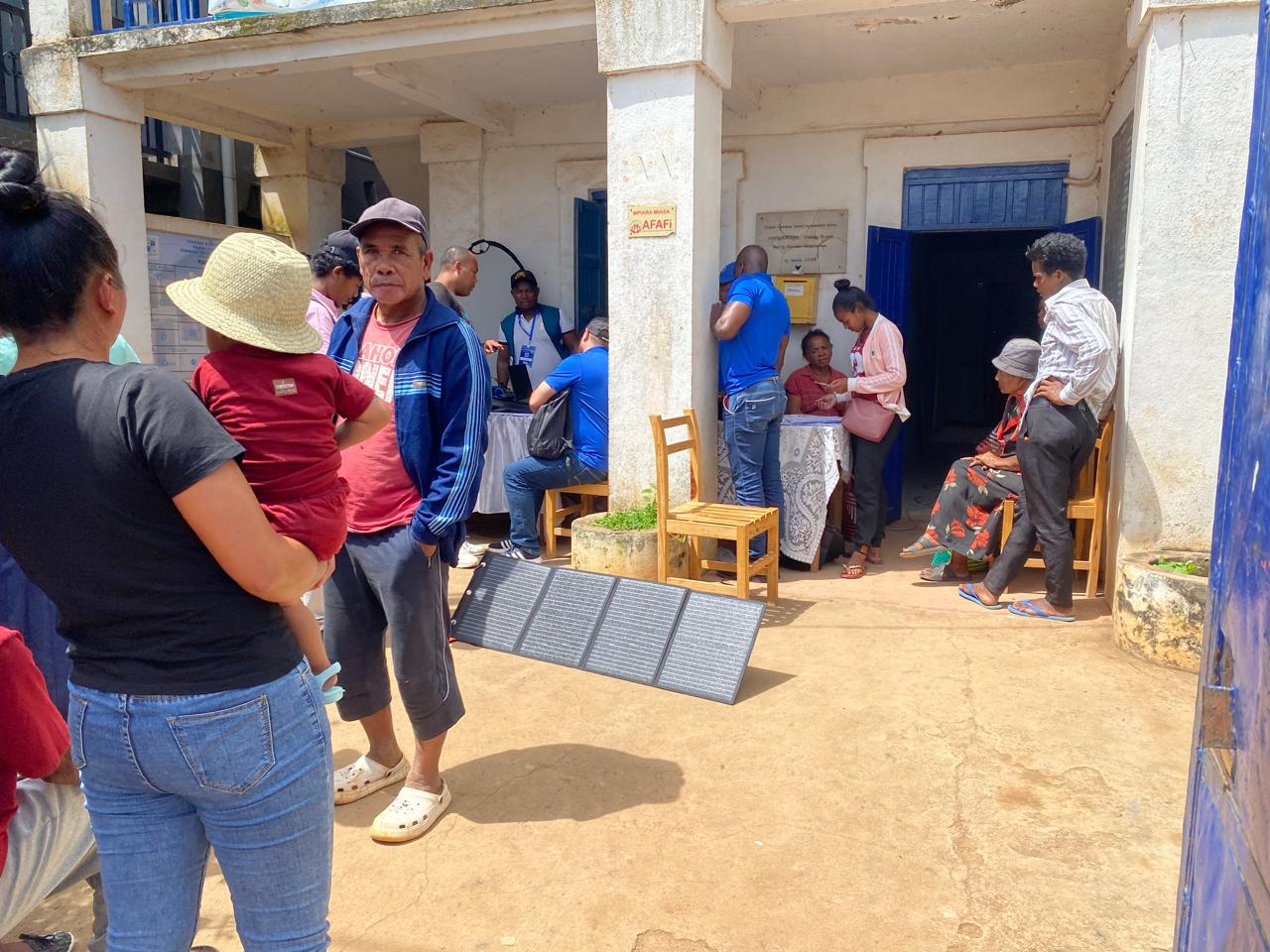

A mobile Biometric Registration Centre, powered by foldable solar panels.
Supporting the Client Through UAT and Deployment
A key part of the project was helping PRODIGY through User Acceptance Testing. Laxton's teams prepared software releases and database updates so they were ready to deploy the moment UAT was signed off, running overnight builds so local teams could start work the next day. We kept stakeholders informed throughout the tight windows between sign-off and live testing, a balance that proved critical in keeping the rollout on schedule.
Nationwide Rollout Under Pressure
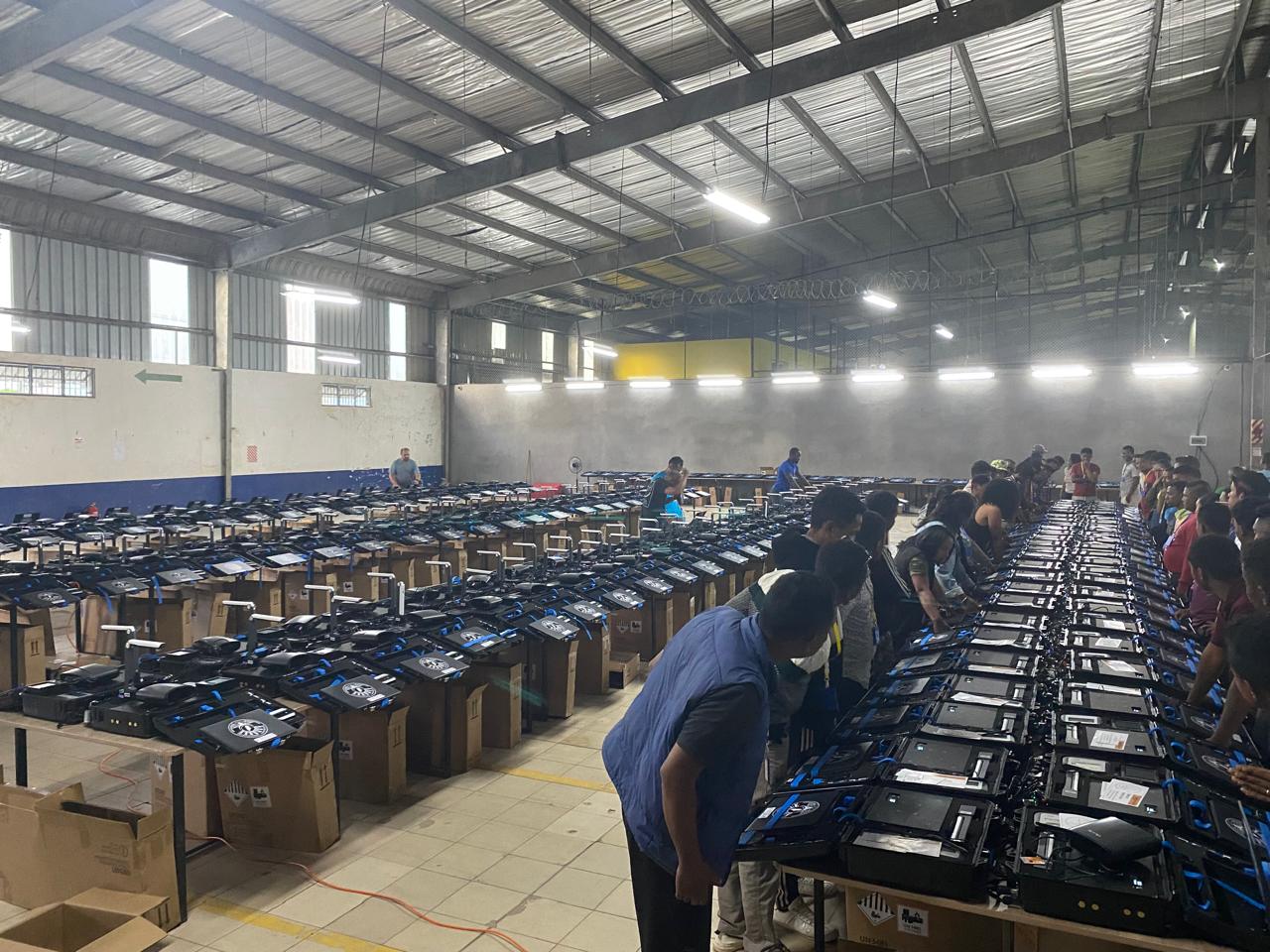
One of the toughest parts of the project was getting 2,500 kits out to districts and communes across Madagascar. Laxton supported every step, from dispatch planning and secure transport to regional delivery and quality checks. Routes and schedules were adjusted in real time as political events and weather conditions changed on the ground. The focus stayed on keeping enrolment teams equipped, trained, and productive, so the programme could deliver on its promises to citizens.
Proven at Scale in the Pilot
The pilot phase ran across 116 registration centres in 26 communes over four weeks in early 2026. It was the first real test of the system at full scale. The results were:
129,613 citizens enrolled, averaging more than 5,400 registrations per day
100% data completeness with all enrolment files successfully synchronised and processed
≥99% kit availability and functionality across the full pilot period
100% of technical incidents resolved within the defined SLA windows
9.35 minutes average enrolment time, including full biometric capture and document verification
Despite registrations being suspended for a day by a severe tropical cyclone, the programme still exceeded its targets and produced the evidence needed to proceed with mass rollout.
Risk Mitigation in a Challenging Environment
Infrastructure issues created a constant risk. Power outages caused server instability, and data-transfer was difficult in remote regions. Laxton tackled these head-on by adding extra connectivity equipment, supporting power backup, and working with PRODIGY to bring in Starlink for connectivity in the most remote sites. Every lesson from the pilot fed straight into the software and hardware updates rolled out before mass enrolment began.
Training That Prepares Operators for Real-World Conditions
Laxton ran in-country training programmes built around the realities of field work. The courses combined classroom theory with plenty of hands-on practice, practical exams, and clear user guides. All training materials and manuals were provided in both French and Malagasy, and digital copies were installed directly onto each kit so operators could check them in the field. After the pilot, the training plans were expanded to focus even more on hands-on practice, so operators feel confident with the equipment from day one of mass enrolment.
Laxton's Role in Madagascar's Digital ID Success
Multimodal biometric enrolment kits (Mobile and Ultra Mobile)
Online/offline enrolment software and central server integration
Pre-enrolment database integration and data synchronisation infrastructure
Nationwide logistics, dispatch planning, and commissioning
In-country advanced training programmes in French and Malagasy
Technical support, warranty services, and ongoing operational support
A Foundation for Madagascar's Digital Future
The project is still in its early stages, and a full impact assessment is ongoing. Mass enrolment started on schedule, with 2,500 kits deployed across the country. Software and infrastructure milestones were met in line with the agreed plan.
Starting enrolment on time, through cyclone season, a change of government, and some of the toughest field conditions seen on a project of this size, shows just how resilient the solution and the teams behind it really are. For Madagascar, it is the start of a single, secure national identity for every citizen. For Laxton, it is more proof that inclusive digital identity can be built anywhere, even in the hardest places.